红烧肉 Braised Pork Belly
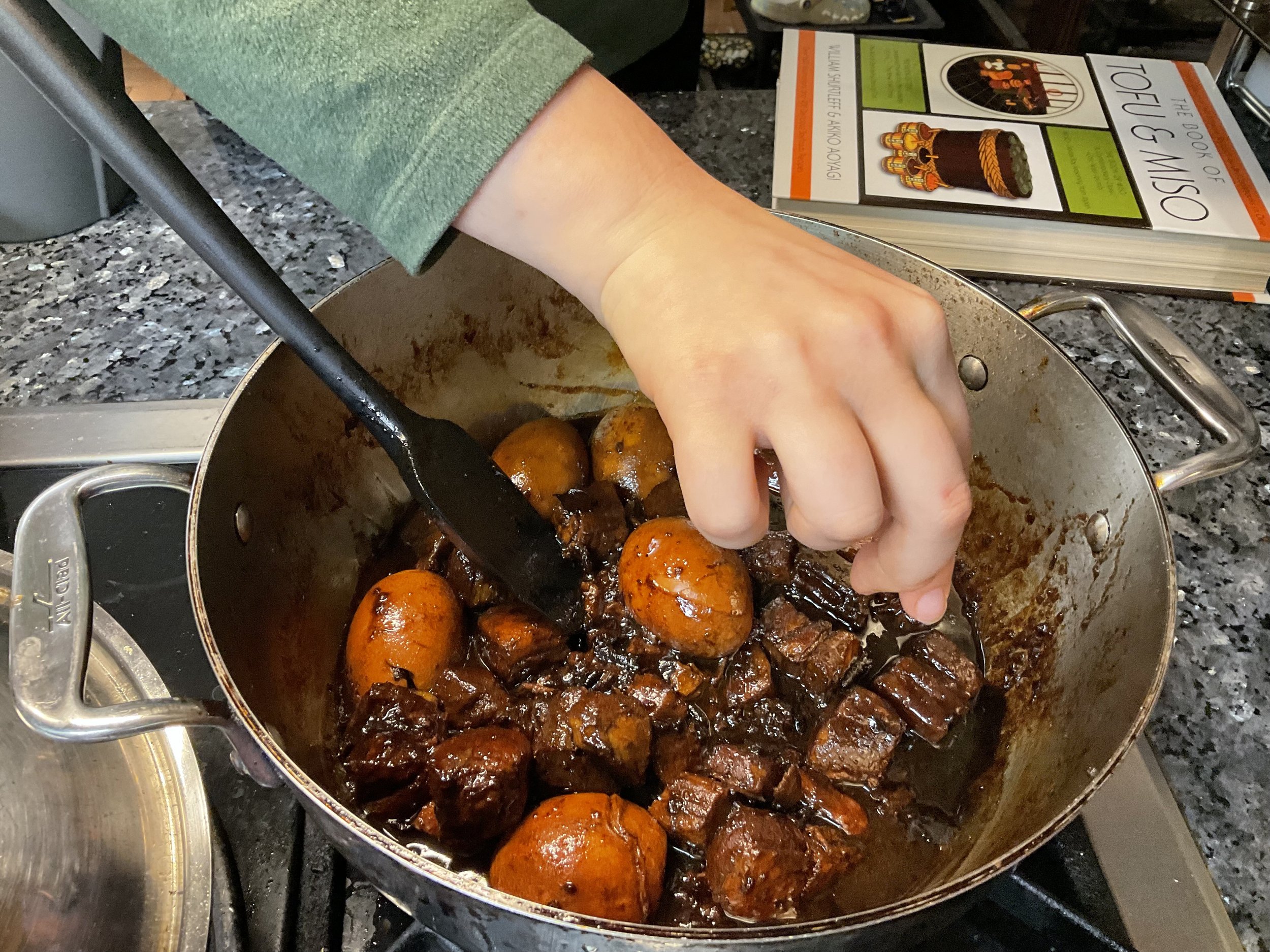

Braised pork belly is a quintessential Shanghai dish that when prepared well, melts in your mouth and offers the most ecstatic food experience. The Chinese insists on including pork rind, which maybe difficult to find in U.S. grocery stores. My father’s (Waigong) speciality braised pork (东坡肉) has two secrets: “少着水,慢着火“ (less water, slow heat) and a strong cup of tea as the only braising liquid.
This dish brings back memories from Chinese New Year celebrations of my childhood: All our relatives in Beijing (my father’s sister and cousin’s families) gathered at my home on New Year’s Eve and were treated year after year with my mom’s annual feasts. When I was eight or nine, Waigong’s 东坡肉 made its debut after he spent two years at a labor-camp in 江西鲤鱼洲 during the height of China’s Cultural Revolution. His “reeducation” as a brilliant professor from Qinghua University consisted solely of hard labor, which left him with severe hearing loss caused by carrying 150 pound bags of grain. My father had never cooked in his life but became a cook for hundreds of his fellow prisoners during his time at the camp. 东坡肉 was a special dish he learned to cook. His debut version at our holiday table was the best braised pork belly I ever tasted, slightly charred and slowly stewed in thick sweet and savory sauce to perfection. Our pack of 12-13 hungry Chinese relatives devoured the dish in such vigor that I only managed to get a couple of bites. For a more detailed description of the infamous labor camp dedicated to “intellectuals” from Tsinghua University and Peking University, China’s MIT and Harvard, see this link.
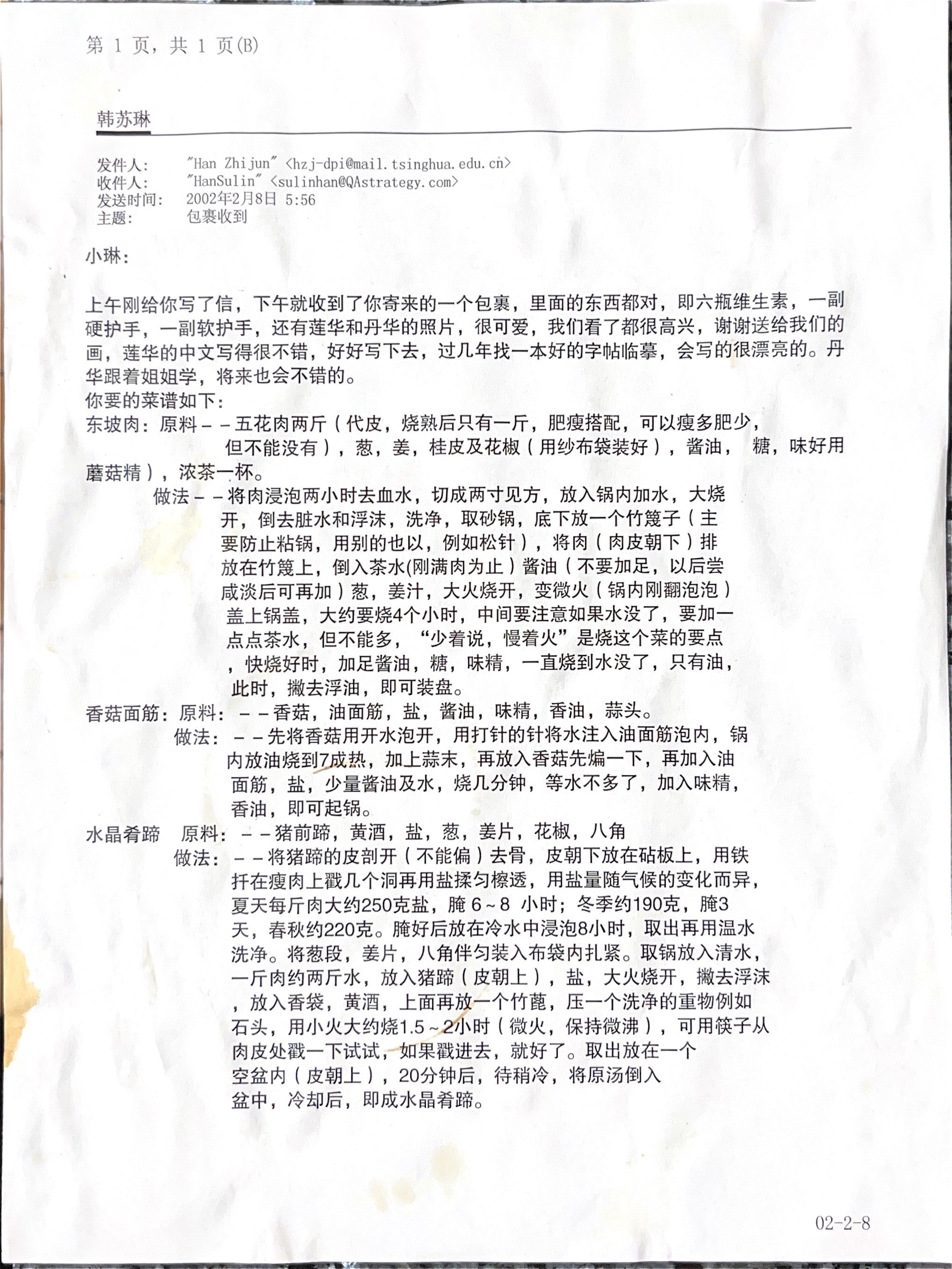
Dad passed away in October 2020. I found his recipe from an old email (photo above) and decided to combine his 东坡肉, especially the strong tea infusion with an otherwise fine recipe found online. Waigong 外公 would have approved. We miss you.
Ingredients:
Pork Belly (best if with pork rind), 1000g
Ginger, 10 fat slices
Chinese or regular cinnamon sticks, 1-2 large pieces
Bay leaves, 4-5 whole
Star anise, 4 whole (can substitute with fennel seeds + caraway seeds)
Chinese jujube dates (pitted) or other sweet dried fruit such as prunes, 10
Brown sugar, lots and to taste, about 75 grams
Dark and regular soy sauce, 60 ml (can substitute with regular soy sauce only and add a tablespoon of Korean gochujiang or Chinese bean paste toward the end of the braising)
Salt, 10g
Chinese dark vinegar 镇江香醋, 50g
Garlic, 10 cloves
Scallion, lots
Dried bamboo shorts (扁尖), optional (soaked in hot water for 20 minutes)
Very strong brewed tea (from tea leaves of any kind), 4 cups
Hard boiled eggs, optional
Instructions:
Blanch whole pork belly in boiling water for 30 seconds
Clean and cool in cold water
Cut pork belly into 1-1.5 inch pieces
Blanch in boiling water for another 30 seconds, and clean as above
Fry spices in a wok with a little oil until fragrant
Add pork belly pieces and fry until fat renders and surface of meat is slightly charred (煸炒至微黄)
Add brown sugar, dark and regular soy sauce, and salt, stir until meat takes on dark brown color (上色)
Put everything into pressure cooker, add jujube dates, whole garlic cloves, and ginger slices, bamboo shoots, and enough tea to cover meat
Cook after pressure is set for 20 minutes on high
On stovetop in a stockpot, bring everything emptied from pressure cooker to a high boil and then lower to a simmer to slowly thicken the sauce
Add black vinegar to taste and ajust seasoning once sauce is thick and sticky, and oil separates from sauce
Keep total cook time to 40-45 minutes to prevent the meat from falling apart
Eggs can be added during the last 30 minutes, best to slice the surface of the hardboiled egg to let flavor seep through
Notes: What makes this dish work: 1) Choose pork belly that is well marbled but not too fat. 2) Err on the sweeter side for the dish to pay homage to its Southern Chinese origin and the dish tastes better. 3) Don’t cook the meat for too long: 20 minutes in the pressure cooker should have cooked the meat quite well. The stove-top braising is to thicken the sauce and make the flavor of the sauce seep in deeper. If the sauce is still too thin, you can take out the meat and boil down the sauce before returning the meat in the thickened sauce for a little longer. Enjoy with a bowl of piping hot white or brown rice!
Last edited: 4/5/2026