Easy Roast Whole Duck
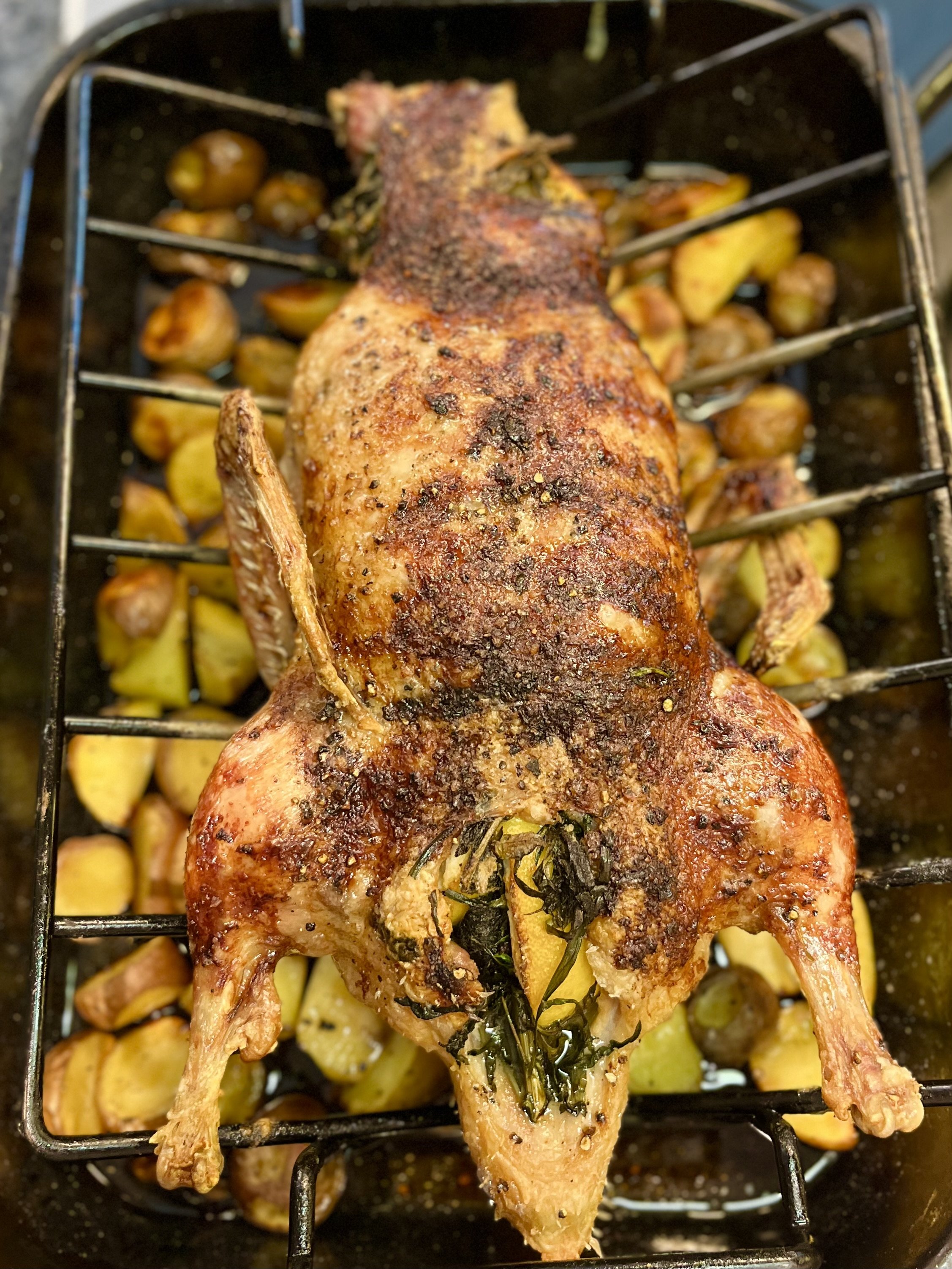
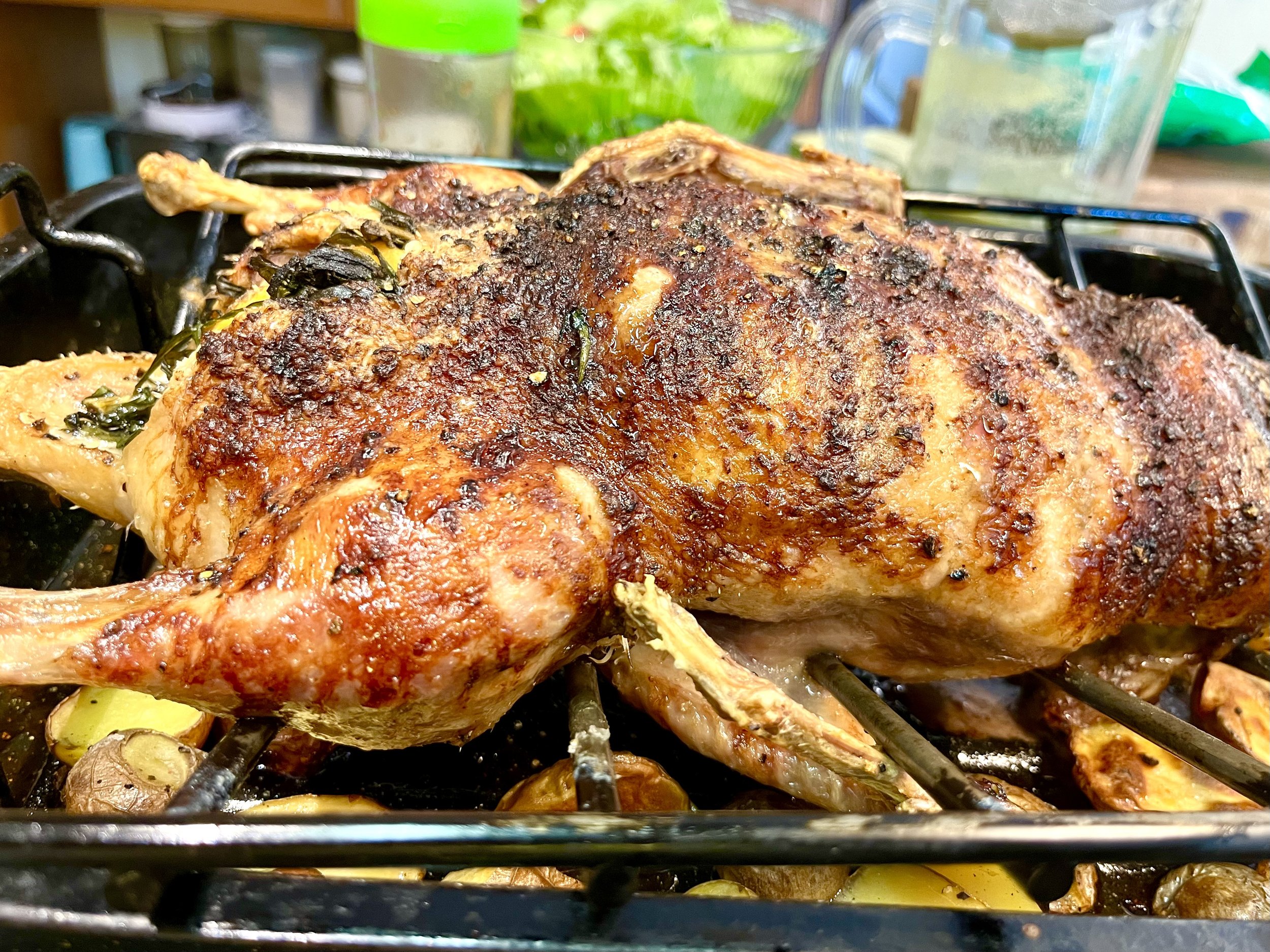
Duck is always a welcome treat in our family. Over the years, we have happily consumed many memorable Peking duck feasts in Beijing. Our longtime favorite remains Quanjude (全聚德烤鸭), and we have consistently preferred it to newer interpretations at restaurants such as Dadong (大董烤鸭). The preparation in Beijing has grown more elaborate with time, with chefs carving whole glistening roast ducks tableside and separating the crisp skin to be dipped in sugar.
Our most recent visit in May 2024 confirmed Quanjude’s continued vitality. Most of our favorite dishes were still prepared with care, and the presentation had become even more refined. CC2 is especially fond of the duck broth made from the roasted carcass, once drinking seven or eight bowls as a mere five-year-old. CC1 laments that many restaurants now require diners to surrender the carved carcass before they will prepare the communal broth. She would much rather make it herself at home. All of it is good. No complaints.
Back in the States, I would not dare try to reproduce true Peking duck, which really requires a large kiln-like oven to do properly. But I have made many excellent roast ducks, and I almost always keep a jar of duck fat in the freezer for special occasions—most notably duck-fat potato pancakes for the girls’ birthdays. That is a blog for another day.
This particular recipe was made with a duck from Indiana, where a smaller, leaner breed is often raised, unlike the larger and much fattier Long Island ducks pictured here. We bought two ducks while celebrating CC#1’s birthday in Indiana last year, and when we discovered this November that one was still in her freezer, we brought it home and turned it into another wonderful family meal.
This recipe is adapted from D’Targnan’s Easy Roast Duck
Note: Upon revisiting this recipe, I realized this “easy” roast duck seems rather complicated with all the steps before and during baking. See second half of this blog for a simpler version.
Ingredients:
1 whole duck, 3-4 pounds
Salt
Sugar
Freshly ground black pepper
1 medium onion, quartered
1 lemon, quartered
Herbs tied together (rosemary, sage, thyme sprigs)
Mixture of 1 tsp of baking soda + 1 tbsp of oil
Mixture of 1 tsp of honey + 1 tbsp of honey
Preparation
Brine duck in salt and sugar solution (3:2 ratio) for 24 hours
Preheat oven to 400 degrees F
Rinse duck in cold water and dry well with paper towels. Using a sharp paring knife, make shallow cuts in the skin over the breasts and legs being careful to only cut through the skin, not the meat.
Place the duck breast-side-up on a rack in a roasting pan.
Pour about 4 cups of hot water, just off the boil, over the skin to tighten it up. Pour out the water in the roasting pan. Pat duck dry with paper towels and let cool.
Season the duck cavity with salt, pepper, and a squeeze of the lemon. Place lemon, herb bundle and onion inside the cavity.
Season outside of duck lightly all over with salt and pepper, then rub duck with baking soda oil mixture.
Add potato wedges (tossed in salt and pepper and 1 tbsp oil) to bottom of roast pan. If there is roasting rack, place duck on rack inside pan.
Roast breast-side-up for 25 minutes, then remove from oven and turn duck over. Roast back-side-up for another 25 minutes, then remove from oven and turn breast side up again. Brush duck breast with honey and water mixture. Use several bunched paper towels to flip the duck.
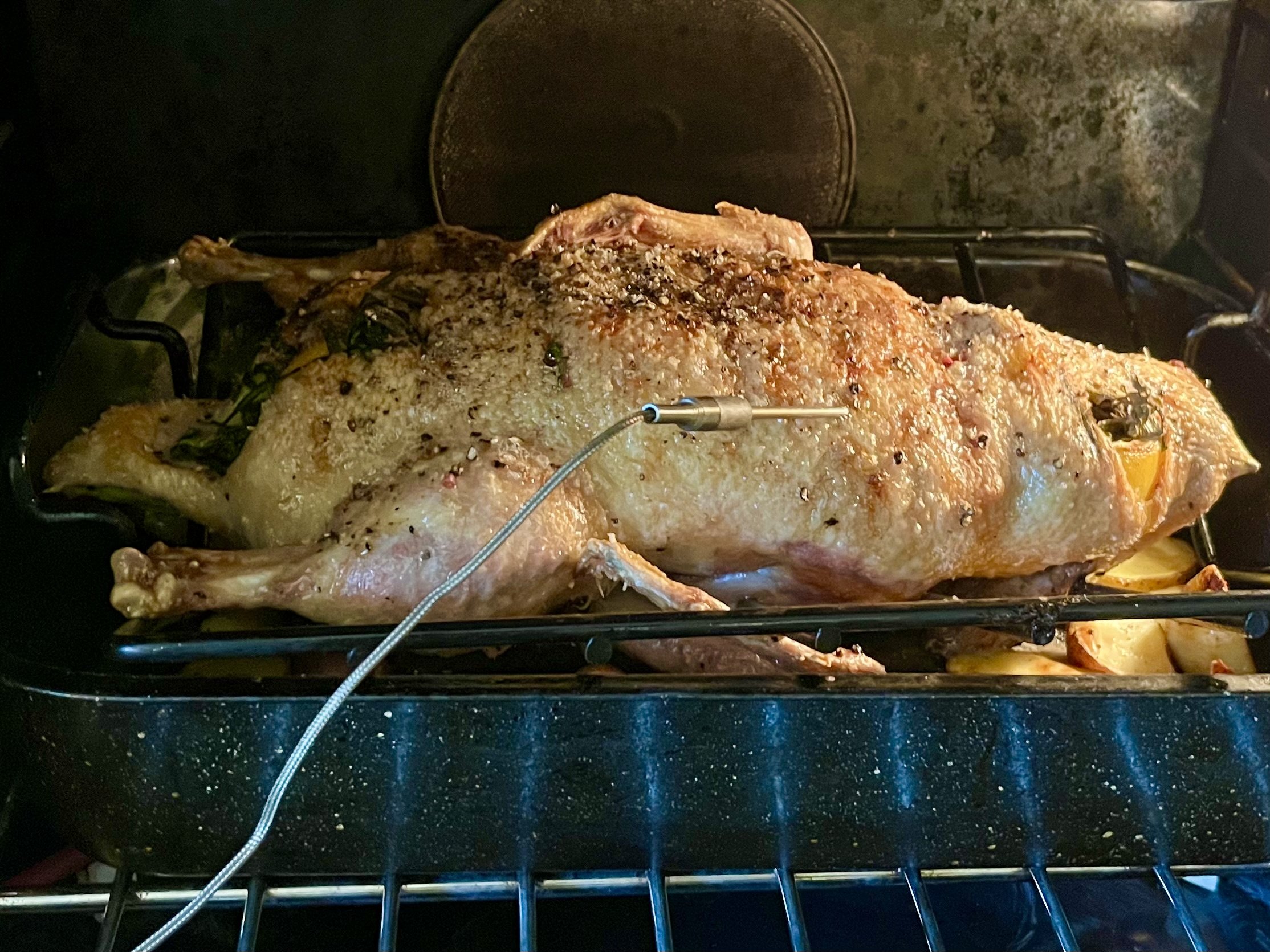
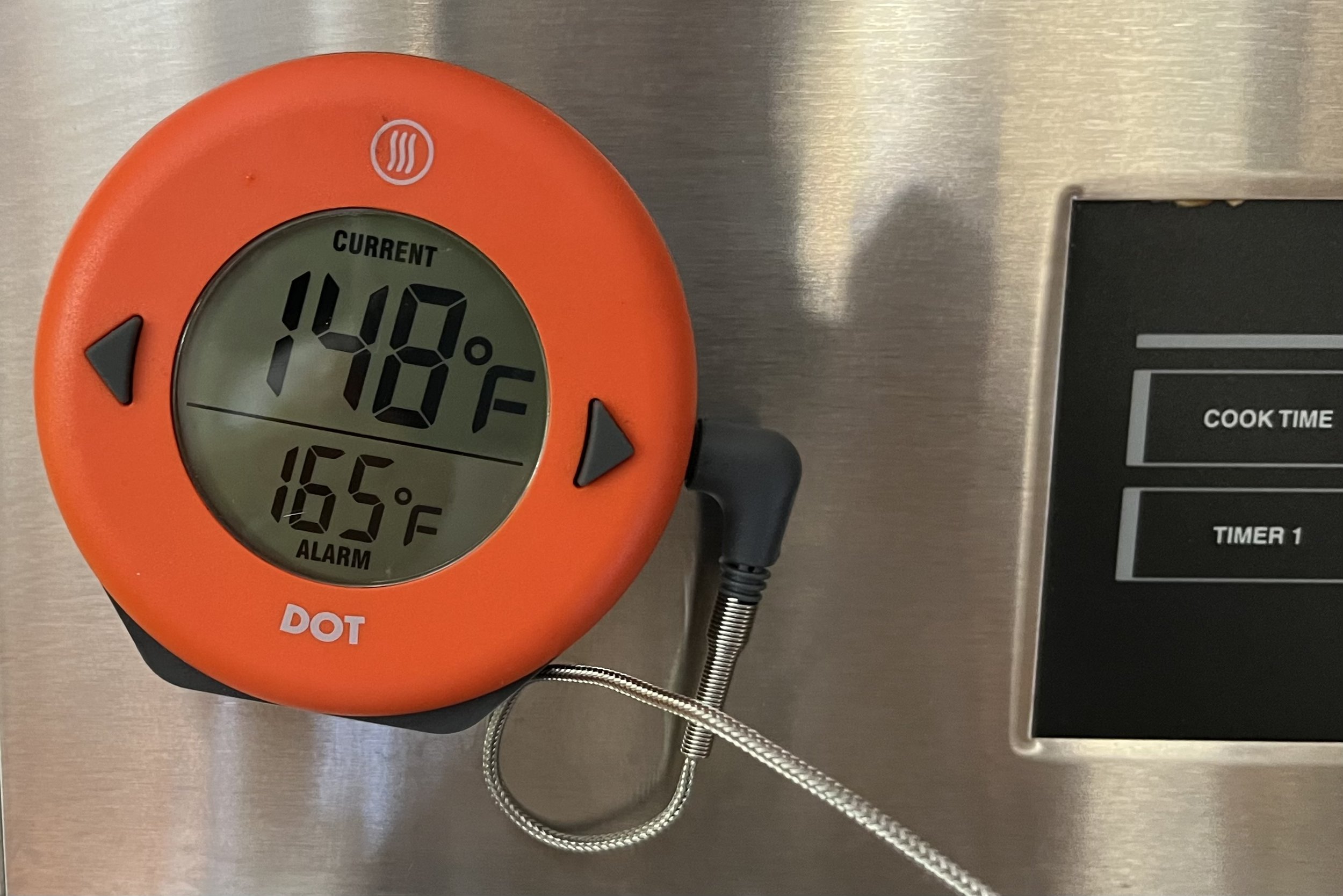
Finish roasting breast-side-up (convection at 400F if available) until the meat at the thickest part of the thigh registers 165 degrees F on an instant read thermometer, about 15-30 minutes more. This brined duck is quite forgiving so if skin is not crispy, increase temperature to 450F and bake longer 10-15 minutes longer. Gently tip duck to drain any liquid from the cavity then remove to a cutting board to rest for at least 10 minutes, loosely tented with foil. Carve and serve.
Post-script: I just made another duck (Long Island variety) using this recipe and the duck with the following changes: 1) I only partially submerged duck in brine for 4 hours; 2) I didn’t flip the bird 3 times as directed, baking instead with “convection bake” setting at 380F and using a probe thermometer to gauge the temperature exactly to 165F. The result was not nearly as good as my previous attempts. The meat was not as flavorful, and parts of the duck, especially the legs and thighs looked undercooked. Will revert back to the original recipe next time for further testing.
Easier Roast Duck: Version 3
Same ingredients as above with the following instructions:
Brine duck in salt and sugar solution for 3 full days; OR, used dry brine with 3 tbsp of salt and 2 tbsp of sugar , fresh thyme, and orange zest for 3 days exposed to chilled air in fridge or in our cold sunroom in winder.
Preheat oven to 350F
Rinse duck in cold water and dry well with paper towels. Using a sharp paring knife, make shallow cuts in the skin over the breasts and legs being careful to only cut through the skin, not the meat.
Season outside of duck lightly all over with salt and pepper, then rub duck with baking soda oil mixture.
Bake breast side up until internal temperature of thickest breast portion reached 150F (about 1 hour)
Pull out duck to brush on honey glaze and return to 375F oven until internal temperature reached 155F
Finish with convection bake at 375F until internal temperature reaches 160F.
Perfectly browned skin and tender and juicy meat. Served with duck l’orange sauce